Hold What Ya Got

DSC02446

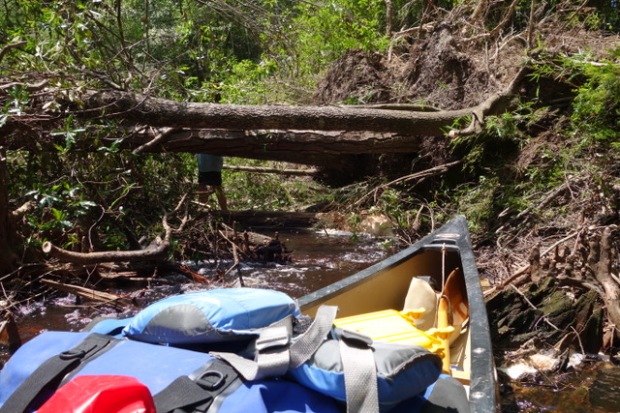
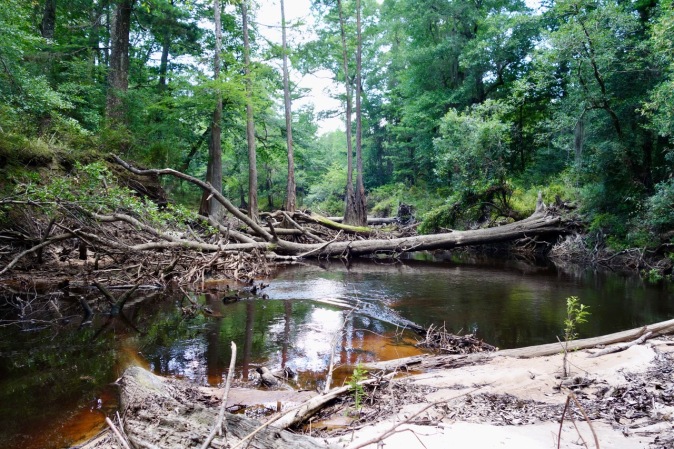
Three downed trees – one partially submerged and two across the bank, block our way.

“Hold what ya got.” How could I possibly do anything else, I thought, as I balanced in wet Chacos®, on a slippery log, trying with all my muscle to shove the bow of our loaded canoe over yet another fallen tree.

I’m sure it was nostalgia, work from home boredom, or in reflection, poor recall, that made me agree to recreate our maiden voyage down the upper portion of Alabama’s Escatawpa River. It had been 16 years since the epic journey. This time, a tropical storm delayed our departure by two weeks, initially leaving the water too dangerous for paddling but now, looking just right for a weekend of adventure and solitude.

As the saying goes, looks can be deceiving.

Travel by canoe can be much like car camping, following the reasoning, “if there’s room for the gear, you can take it with you.” We’re seasoned enough campers to know we could run into multiple obstacles and mindfully made the decision to pack light.

Our daughter Genna, now 22, dropped us at the put-in point, delighted to drive her dad’s new pick-up but bemoaning the fact she had work to do and couldn’t accompany us. In hindsight, she was one lucky girl. After snapping the send-off photo, we launched the canoe in the tannin stained water and readied ourselves for miles of unspoiled wilderness.
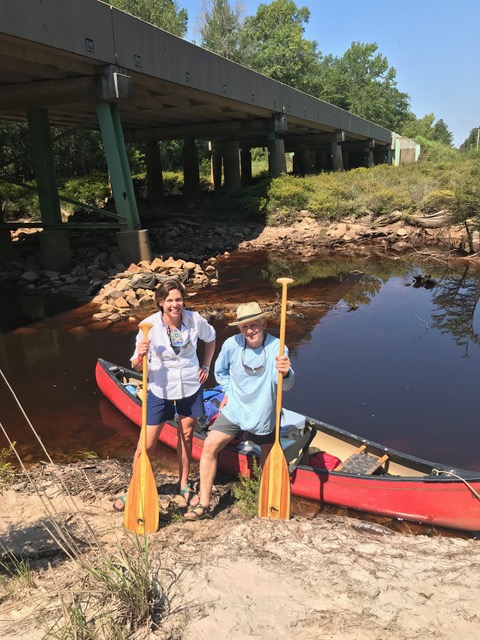
Send-off photo

Send-off photo

As with our initial trip years earlier, the obstacles came early. We paddled just 100 feet before encountering a freshly, downed tree across the river. Still in high spirits, we hauled the boat across, thankful we’d left the large ice chest at home, and shrugged it off as the price of seeking scenery worthy of a postcard. Back in the boat, the river seemed oddly low, as if the water was falling quickly or the gage reading we’d relied on for navigation was incorrect.

Another hundred feet – another tree. This was the scene repeated over and over for the next 10 hours, in which time we traveled a mere four miles. Nature had thrown us a doozy. If a fallen water oak or pine didn’t block our way, the water was so low it exposed an obstacle course of bald cypress knees stretching from one river bank to the other. Unlike our trip years ago, we couldn’t simply navigate between them but rather had to pick our way through on foot. Turning around meant not only dragging the boat back over the same obstructions but also paddling against the current. The next take-out point was seven miles downriver. Forward was the only way out.
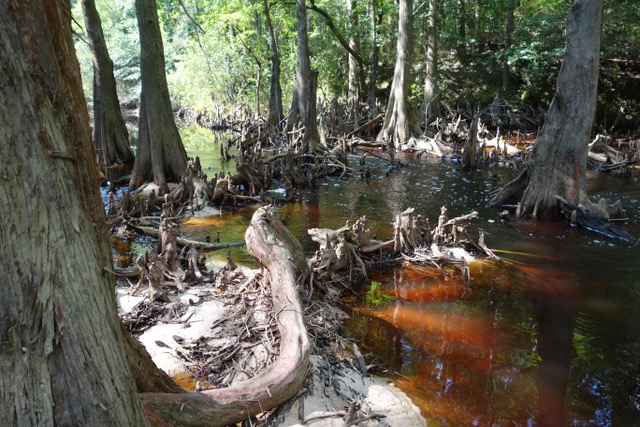
Cypress knees
Low water exposed bald cypress knees stretching from bank to bank on the Escatawpa.
 

DSC02455

A fallen water oak and a dam of branches impeded our progress. This scene repeated itself every 100 feet or so for the first four miles of river.

In my head, I switched to yoga’s warrior pose, and the oft repeated expression, “sometimes life is just hard.” At times, when it seemed we couldn’t face another obstacle, I laughed at the absurdity of the situation, (which was a relief to Lynn who noted other middle-age women might not think it funny). Exhausted, I abandoned any clinging notion this trip would be like the first one. The concept of vairagya or non-attachment allowed me to concentrate on the present, accept the situation, and lower my expectations that the river’s next bend might offer something better. Standing on that log, “hold what ya got” became both literal and philosophical.

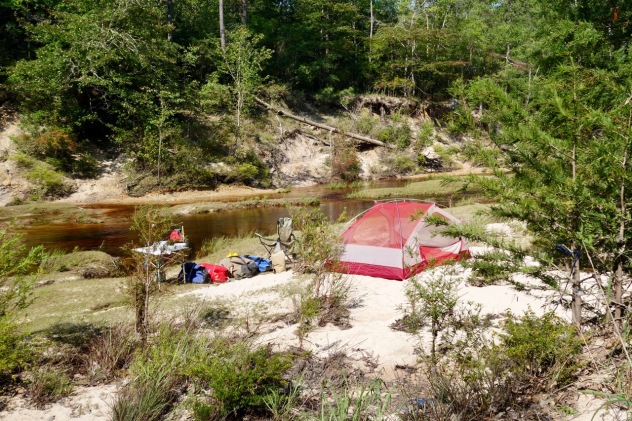
Just before dark, we found a beautiful campsite where we were lulled to sleep by the gurgling sounds of tiny rapids. A reward for a hard day’s work. Day one’s adventure offered nothing close to a lazy paddle, but it did remind me when life gets hard, take it one fallen tree at a time.
DSC02522

Our first night campsite on a grassy bank.
 

Turkey Trot

IMG_5023

Despite the name of this blog post, I’m not writing in November. There are  no Thanksgiving circulars in the paper, no Macy’s Day parade, no runners finishing a 10K before sitting down to dinner.

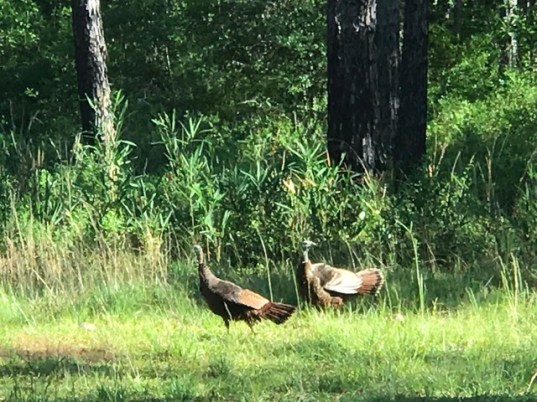
It’s June and I’m sitting on the porch, in our little corner of Washington County, Alabama remembering the real turkey trot – two hens and nine chicks, who circled the house less than a month ago. More importantly, I’m understanding why it happened – because we let nature do what nature does, instead of bending it to our idea of beauty and perfection.

For years, my father-in-law Preston kept a well-manicured lawn between the house and the lake. Though hardly a country estate, mowing gave the dog-trot cabin a neat appearance and kept the grass from tickling our legs while walking to take a swim. The grass was always tidiest before company arrived. This year, Preston and Lynn decided to forgo bush hogging, instead, allowing the wild flowers to bloom among the grasses.

Oh, how the turkeys and song birds love it.

Turkey Trot

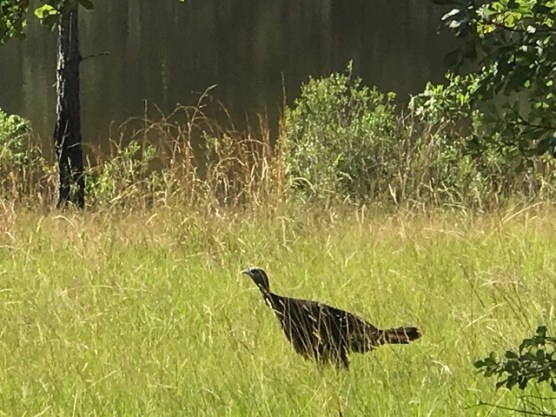
The hens ignored us, while finding their breakfast in the open field of tall grass.

One Sunday morning in May, while drinking our coffee on the porch, Lynn and I were astonished to see two turkey hens, trailed by nine chicks, come within 30 feet of the house. They walked past the barn, the tractor, and my SUV, heads thrusting, in turkey fashion, while snatching bugs from the knee-high grass. It was such a feast, they didn’t seem to notice as I slipped in the house for my camera and later followed them on video. To hell with neatness, this was a turkey’s idea of perfect.

IMG_5017

At the rear of the house, the turkeys seemed more aware of human presence but continued to circle the building, albeit with caution.

It made me wonder why some of us, myself included, reach for perfectionism, whether in our personal lives or personal space, in the first place. (Yes, psychologists have studied the question for ages, but it took some tall grass and a lot of working from home time to bring it front and center for me.)  A friend once confessed she struggles daily trying to overcome the desire to be perfect. It’s nothing new to note, in the era of social media, she’s certainly not alone. Who doesn’t have a perfect family on Facebook, even if behind the scenes, things are a god awful mess? Instagram is filled with photographs, carefully edited and filtered to blur the imperfections. “Perfect” is the word our president tweets to describe phone calls, meetings, and anything else agreeing with his viewpoint.

Yoga has taught me that to seek perfectionism in my own life, is to let my ego get in the way of the real work. I recently joined a small group of individuals for early morning, outdoor classes with a fitness trainer. As the oldest person in the group, I often use the low-impact modification of various exercises. I have zero anxiety about the modification even as the rest of the group executes flawless jumping jacks. In my younger years, while it could result in injury, I would have chosen the high-impact option, because to do less would have meant I wasn’t good enough. In the same light, I’ve often had individuals tell me they could never practice yoga because the poses look too difficult. They believe, that to practice yoga means one must execute the poses perfectly. I’m the first to admit, after twelve years of  practicing yoga, I look nothing like the models who can touch their heels to the floor in downward dog.  The practice isn’t about reaching the floor, but rather accepting the notion it’s okay if it never happens.

Back at the camp, nature has demonstrated the seemingly imperfect, like tall, overgrown grass can produce spectacular experiences. Two Eastern Kingbirds, members of the flycatcher family, have taken up residence, plucking their meals from the overgrown field. The turkeys returned the following weekend, but without their chicks. We haven’t seen them since and when I grab the binoculars to search for signs of movement, Lynn gently suggests, like a comet in a night sky, it may have been a rare sighting. A sighting that makes for a good story and a reminder that, like the grass, we should all embrace a little messiness in our lives.

Note: As I was uploading the video below, I realized I was so excited to capture the turkeys in motion that I failed to turn the phone horizontal while shooting the video. Oops, guess I’m not perfect.

COVID Spring

Pitcher plants

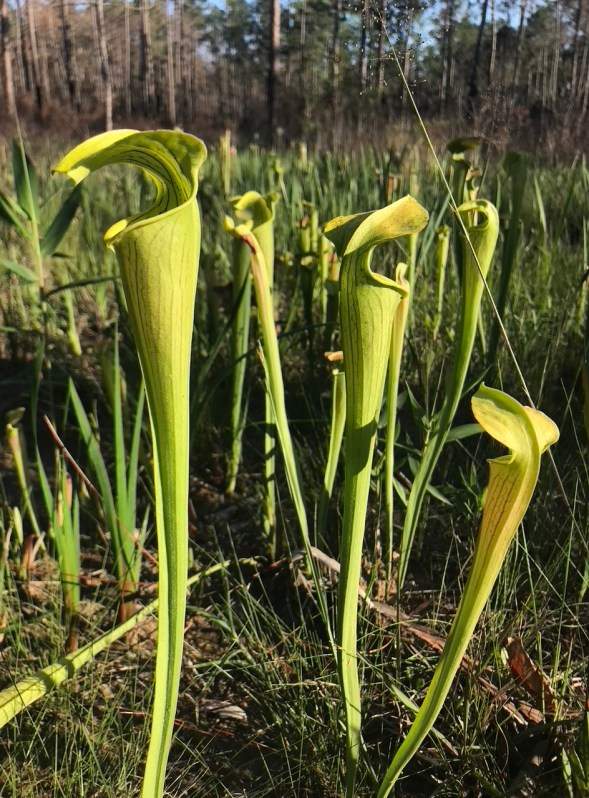
Three weeks after a fire, pitcher plants thrive in the soft ground of the pine forest.

On the first day of Work from Home (WFH), I scrubbed the bathroom floor on my hands and knees, perhaps subconsciously hoping my cleaning would ward off Coronavirus. On the second day of WFH, I set my personal best on a daily four-mile walk. I can’t tell you why. Maybe I thought I could outrun the virus. Day after day, driven by some inner force, and between work tasks (the paid kind), I tackled some new chore –  weeding the flower beds, organizing the potting shed, washing windows. But after three weeks of the new normal, I was exhausted and knew it was time to trade the stress of this pandemic, not for a mop bucket or a walk around the block, but for our camp in the woods.

Feeling a bit like a criminal escaping from jail, I loaded the car and set off – looking forward to a spring drive through Mobile and Washington Counties. It’s a route that makes my head swivel as I seek small signs of nature, like the pair of osprey in their nest overlooking Mobile Bay or a spectacular display of melon-colored, native azaleas growing among a stand of hardwoods.

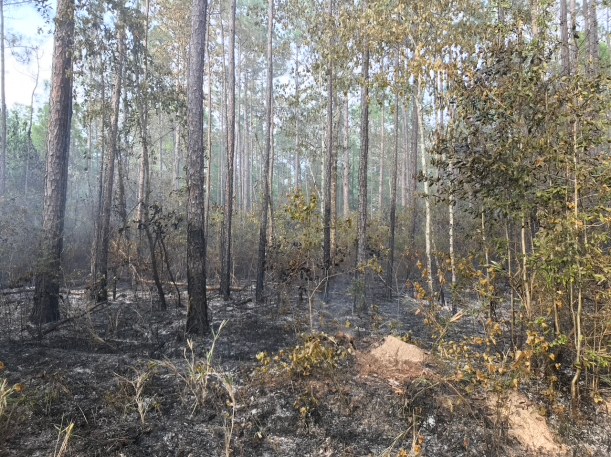
Our own woods offer a dozen shades of green, colors I find calming and restorative. So even though I knew it was coming, I was surprised when I arrived at our land just hours after a controlled burn. Where, that morning, the sun glinted off the verdant acres of longleaf pines, their trunks crowded with waist-high gallberry bushes, the ground was now black , tendrils of smoke still rising from charred chunks of pine lighter on the forest floor .

Controlled burn

The Longleaf pine forest still smoking after a controlled burn earlier that day.

My husband Lynn tries his best not to burn in the spring, but this year, a burn ban in the dry fall and deluge of rain in the winter, left him no choice. As I pulled through the gate, driving the road which doubles as a fire line, I couldn’t help but think a controlled burn is not unlike this COVID spring.  An instant stop to an out of balance ecosystem.

The purpose of a controlled burn is to both prevent wildfires and restore the biologically diverse plant and animal communities of the longleaf pine ecosystem. Other areas of the forest also benefit. We’re fortunate to have several pitcher plant bogs on our property, where each spring, the red-veined, tube-shaped, carnivorous Sarracenia rubra (sweet pitcher plant) push through the dirt, soft from the winter’s rain to emerge in breath taking clusters. Fire weeds out invasive wetland trees and shrubs, allowing the plants to flourish in the sun.

IMG_4806

Pitcher plants in a bog uncovered after a controlled burn several years ago.

A controlled burn lets the forest pause. And perhaps this terrible pandemic gives us pause as well. We’re compelled to think about our safety and health, but also forced to slow down to a pace that allows us to weed out unhealthy thoughts or habits. Like the forest rebalancing its ecosystem, we would do well to take this mandated stay at home order to rebalance ourselves.

I won’t go so far as to say that this pandemic will change all my bad habits and I’ll emerge a new person. Some things like an affinity to work 24/7 seem hardwired. I can’t just flip a switch and turn it off. But I’m certain, taking pause will begin to create needed change. The new normal means decelerating, looking for the smallest joys, and returning to center.

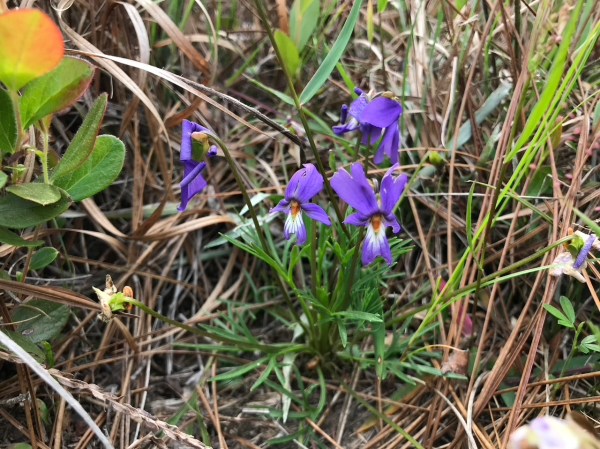
My practice began In the woods that weekend. Beyond the blackened ground, I took notice of the pitcher plants, the tiniest irises, the gopher tortoises, the blue birds, and yes, even the destructive carpenter bees. All living beings, dependent upon the forests’ regrowth.

IMG_4706

Tiny wildflowers thrive in the forest

Back home, I turned it down a notch as well. Though my “to do” list could go on and on, I set aside my expectations, no longer feeling the nagging urgency to tackle it all. The bedroom closet can wait. So can the bathroom drawer. Left with little choice but to slow down, I delighted in the magnificent  show of my backyard orchids and irises, which have poured all their energy into blooming this Covid Spring.

Car Camping

“Even a happy life cannot be without a measure of darkness, and the word happy would lose its meaning if it were not balanced by sadness. It is far better to take things as they come along, with patience and equanimity.” Carl Jung

Trail Hawk 1

As a sales rep, I like to joke that I live out of my car. Sleeping in the vehicle elevated my relationship with the Jeep to a new level.

My mother will tell you she’s not much of a camper. Although to be fair, she’s had more outdoor experience than many. When I was very young, our family of four camped in travel trailers at state parks. Years later, when my brother and I were both out of college, she surprised us all by agreeing to a week-long, guided rafting trip on the Green River.

Given that she is more amenable to a hotel than a tent, I’ll never know what possessed my mom to volunteer for a Girl Scout camping trip to Disney’s Fort Wilderness when I was a pre-teen. To this day, we laugh while recounting the memory of her trapped in the back seat of our two-door, 1976 Pontiac Grand Prix sedan, knocking on the window for someone to let her out, because she couldn’t reach the door handle. She had chosen to sleep in the car rather than in a tent pitched on wet concrete. I can’t say that I blame her but at the tender age of 12, I’m sure I swore I would always be tough enough to choose the tent.

1976 grand prix

A 1976 Grand Prix similar to our family car. We didn’t have the T-tops, but check out the size of that door. No wonder my mother couldn’t reach the handle from the back seat.

Forty-three years later, on a warm, rainy night in Tuscaloosa, Alabama, I found myself simultaneously grumbling and laughing as I searched for inner patience and a comfortable way to stretch out in the back of my Jeep Grand Cherokee. On football weekends at The University of Alabama, we’ve discovered camping is the way to go. There’s no three-night minimum for a room and we avoid the post-game, two-hour wait for a table at a local restaurant. With a quality set of camping gear, one can experience all the comforts of home – except when it’s raining and the tent leaks.

It wasn’t our first time pitching a tent in the blinding rain, but never had we noticed all those little pools of water on the inside. Lynn dried out the tent in hopes the water had dripped in during set up. We took our daughter to dinner, fingers crossed, when we returned our tent would still be dry. Of course, it wasn’t, and that’s how we found ourselves at 10 p.m., lowering the seat, cracking a window for ventilation, stuffing our dry bags into the front seat, and inflating our air mattresses in the back of the SUV. When morning arrived and Lynn pressed the button to lift the hatch, we realized we were trapped – just like my mom in the back of her Grand Prix. Laughing at the memory and the similarity, I located my keys, and opened the door with the remote, revealing sweet, dry morning air.

Lynn Bed

Lynn climbing in the car for the night.  Glad we were still smiling.

Morning stretch

Early morning stretch and clear skies.

Admittedly, at the time of the debacle, after a long week of work, it was a bit difficult to be cheery, and as Carl Jung said, “take things as they come along, with patience and equanimity.” However, it didn’t take long to realize, for us, this was one, slightly cramped night in the car. A tiny sliver of darkness in what is otherwise a very comfortable life. Sleeping in a stuffy vehicle made me appreciate the concept that, every now and then, even if it’s unexpected, it’s good to challenge one’s balance.

Certainly, it makes choosing the tent, pitched on dry ground, look that much better. I think my mom would agree.

wet tent

A tent full of water. We weren’t sleeping in that mess.

Note: Later that morning we noticed little flecks of plastic on the tent’s screen and realized the seams on the rain fly were disintegrating, causing the tent to leak. The manufacturer has since replaced the tent for free. We hope the next camping trip finds us sleeping inside a dry tent, even in a rainstorm.


House Guests


Pileated_Woodpecker_m57-4-021_l_1

Pileated Woodpecker Image courtesy Audubon Guide to North American Birds

Disruptive, unruly, messy, and unwelcome. Those are the adjective best describing our last guests to visit the camp. I wish I were describing a group of ill-mannered, young adults. They would come and go. We would clean up and make a mental note not to have them back to our little corner of solitude. But these house guests, a pair of pileated woodpeckers, arrived uninvited.

IMG_3868

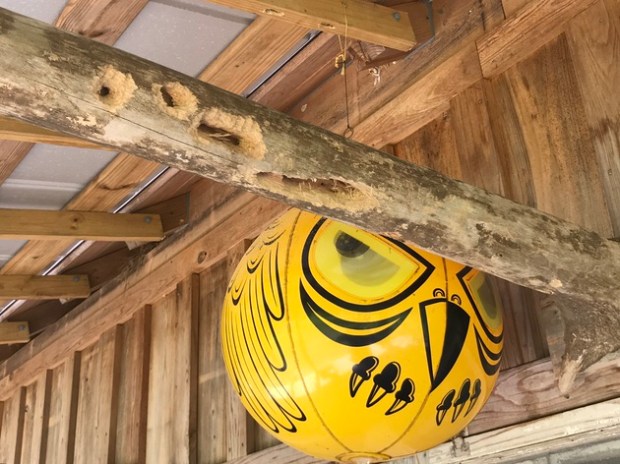
A cypress porch beam damaged by woodpeckers looking for carpenter bee larvae.

It was the second year in a row the largest, known surviving species of the woodpecker family paid a visit to the camp. In fact, to every building on our property. A spectacularly, large bird with a flaming red crest, and a long sticky tongue, it’s a thrill to catch a glimpse of the pileated woodpecker and hear its repetitious call in the woods surrounding our lake. Described in our Golden 1983 edition “Birds of North America” as “uncommon; a wary bird of extensive deciduous or mixed forests,” the federally protected, Dryocopus pileatus, only visits when we’re away. It is not a thrill to find the aftermath of their destruction in the beams, trim, and cypress siding of our camp house where Lynn proudly, hand-picked every cross-beam for the front and back porches.

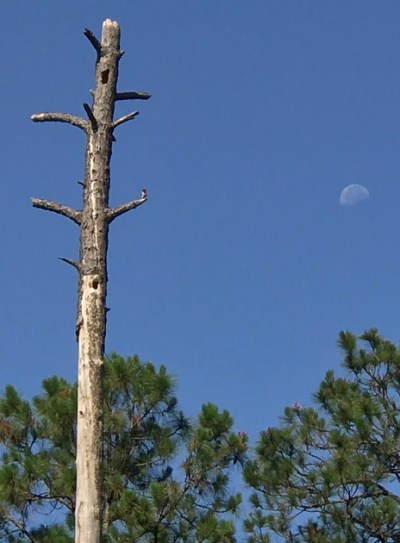
To be fair, we should have expected the birds. One might suggest we even rolled out the welcome mat. Lynn and his father have spent years rehabilitating the woods, once clear cut for the Alabama timber industry’s insatiable appetite, to create a habitat for native species of plants, animals, and insects. A third generation of Longleaf pines now reaches for the sky, the trees’ sturdy trunks and branches the perfect forest for the pileated woodpecker. A combination of lightning strikes and prescribed burns has left a smorgasbord of standing, dead wood, ideal for the birds’ survival.

IMG_3846

A lightening strike created a home for woodpeckers in this longleaf pine. Look closely to see the small redheaded woodpecker on lower right branch.

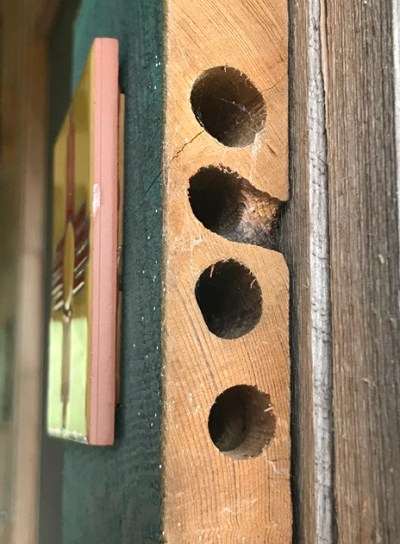
Our tree-farm is also well suited to the carpenter bee, a quarter-size, black and yellow striped, hover craft of an insect with a distinctively loud buzz. Carpenter bees drill dime-size, perfectly symmetrical, holes in wood, seemingly any wood – cypress, juniper, cedar, even chemically treated “yella wood” to name a few. Deep in these cylindrical tunnels, the bee deposits its eggs, which hatch as larvae and must taste to the pileated woodpecker like a fine piece of Belgium chocolate tastes to the discriminate human palette.

IMG_2080

An old piece of cypress siding exhibits an example of the dime-size tunnels created by carpenter bees.

For years, we told our children not to fuss when the carpenter bees hovered around their heads and faces, perhaps mistaking the hue of recently acquired summer freckles for a former home. Leave them alone and they won’t sting was our oft-repeated mantra. And herein lies our conundrum. Long before I practiced yoga, we always believed all beings deserved to walk, crawl or fly through the world with ease. As I’ve written in this space before, we are those people who rescue spiders and other insects from inside our home, setting them free outdoors. (Case in point, recently I drove 30 mph on a busy highway until I could pull over and safely deposit the tree frog who had hitched a ride on my car’s side view mirror.)

We allowed the healthy bee population to drill their holes in our camp’s exterior wood and our hand-crafted, porch furniture. Living in harmony with these pollinators worked. Until it didn’t. Clearly the birds knew they were safe to move in when we were gone. Near every tunnel the bees created, the majestic birds tore long, splintering gashes in the wood to reach their prey. They attacked the beams, the floor boards, and in one very personal case, the pair hacked a hole in the seat of Lynn’s favorite Adirondack chair.

IMG_3870

An orange ball with hologram eyes stands guard against the woodpeckers.

So what to do about the birds and bees? The oft given answer “shoot em” was not an option. In keeping with both our environmental and peaceful lifestyle, Lynn tried other methods to deter the birds. He hung giant orange beach balls like those used by NASA to scare birds away from launch pads. The balls had angry faces with hologram eyes that moved when the wind blew. Owl and hawk decoys were repositioned to stand guard and a trap designed to lower the carpenter bee population hung from the porch beams.

Sadly, nothing was a deterrent for long. Research shows eliminating the bee larvae is the most practical solution to keeping the birds away. It brings us to the age-old dilemma of man versus nature. To ease our minds, we’d like to think we’ll simply be encouraging the bees to make their homes in dead wood provided by the forest – not the lumber mill. If successful, next spring, we’ll sit on the porch in our favorite Adirondack chairs, binoculars in hand, and watch the birds and the bees from afar.

To learn more about the pileated woodpecker or to hear its call, visit The Cornell Lab of Ornithology All About Birds. 


Intact Community

IMG_2986

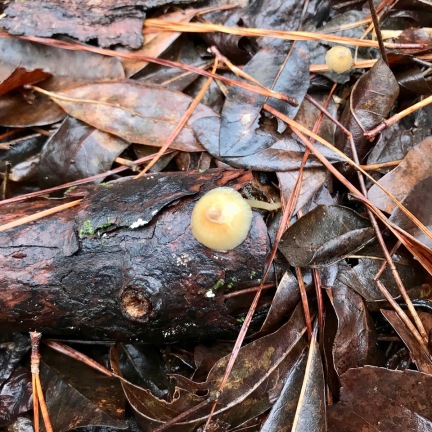
One of many varieties of mushrooms found in the woods of Washington County, Alabama.

Except to buy the occasional button, portobello, or porcini at the supermarket, I’ve never paid much attention to mushrooms. Certainly, the idea I could learn a lesson from how mushrooms grow in the wild never entered my thoughts. But thanks to a trip to Spain last fall, mushrooms were suddenly on my radar. During a daylong tour of Basque country, our guide Jon kept a keen eye out for truffles hidden in the grass along the winding road. He assured us it would be both safe and thrilling to have a taste of the elusive morels.

IMG_2645

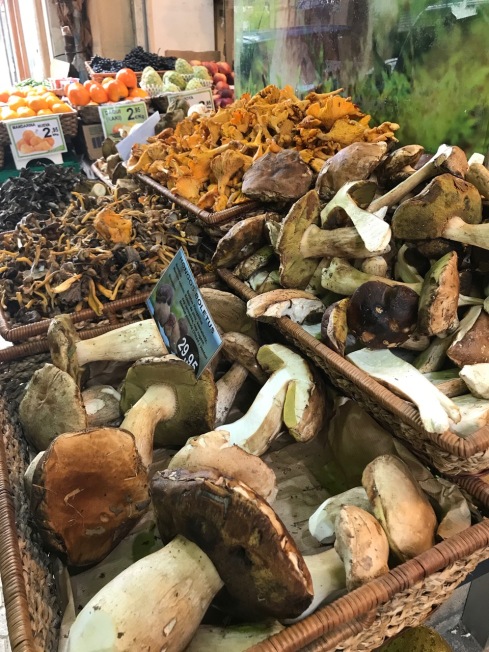
Edible mushrooms for sale in the market in Spain’s Basque country.

We were unsuccessful in our hunt but the thought of foraging rekindled a spark in Lynn’s wilderness repertoire. What if we could find edible mushrooms in our own south Alabama woods? Could we be so lucky to find morels resembling the gorgeous displays of golden and brown fungi in Spain’s markets? On previous hunts, every mushroom we discovered was matched with skull and crossbones in the field guide book. It had been a wet month, perhaps this time would be different.

Our search for edibles was again unsuccessful but I marveled at the large number of varieties we found. Once we started looking, mushrooms appeared every few feet. Where there was one, there were many. They were shaped like golden stars, pink, glossy buttons, turkey tails, and tiny oyster shells. Better yet, while each plant stood alone, it grew in its own intact community with like varieties circling in clusters around the roots of a tree or attached to a decaying log.

It was a nice metaphor as my own daughters venture out into their adult lives. As humans, we’re born into a community of family, people who care, nurture, and circle around us, shaping our young lives. While that community never truly leaves us, later we forage for new friends who share our ideas, interests, and values. When we move to a new town whether for college or for that first job, we must search for that intact community. We must find “our people.” An old friend recently told Lynn and me it was the most difficult thing she had to do when she moved cross country for a job change.

As we all know, searching for community can be intimidating and scary. Yoga taught me it takes self-discipline to put oneself out there and embrace the discomfort that comes from the unknown. To do so and choose our friends wisely is a tall order. But as the saying goes, “you are the company you keep.” It can take a while to find “our people,” and the understanding that while we connect with those individuals who think and look like we do, not all relationships will endure. A look at our wedding album reveals just how much my own friendships have shifted over the years. It’s my hope, as their lives progress, our daughters will have the strength to stand alone, but also rely on a shifting circle of friends who shower them with positive influences.

Who knew foraging for mushrooms could generate such insight?

Safe Mistakes

img_3066

“As you go the way of life you will see a great chasm. Jump. It’s not as wide as you think.”                                                                                                           Joseph Campbell (1904-1987)

I’ll never aspire to be a circus performer but a year ago, I challenged myself to begin practicing aerial yoga. It took three years to talk myself into making the leap from a grounded practice to one that includes silk fabrics hanging from rigging points high above the floor.  While the fabric itself isn’t far from the ground, I pictured myself breaking my neck rather than gracefully executing the poses. It’s a common theme among the nay-saying crowd who endorse the notion they’re too inflexible, old, weak, or afraid to give aerial a try. Working up the nerve, and determined to fix my persistent low back pain, I bought a class package, announcing at my first session, “I would like to find my abs.”

I found my abs, my back is better, and I continue to practice, in part because like any yoga, aerial teaches lessons I can apply to other parts of my life. One recent Thursday, prior to class, my teacher Megrez Mosher (who was a circus performer and can gracefully execute the poses) was talking about safe mistakes. That is, the permission to try something unfamiliar, perhaps make a mistake, but come to no harm. She mentioned how she no longer hovers near more experienced students because, while not experts, they’ve built confidence and have what she calls an “exit plan.” They are free to experiment, work toward the pose, and make safe mistakes.

img_1046

Megrez Mosher spots me long enough to take a photo.

While one must be willing to jump, the theory of safe mistakes can and does apply to camping as well. Fully experiencing nature, far from the distractions of work, school, and the digital world, not only takes practice but also trial and error. So often we hear, “I could never go camping. I like my own bed with the comforts of home.” But how can one dismiss sleeping outdoors if you’ve never known the pleasure of slumbering on a truly, great air mattress?

img_1028

Like Yoga, dinner around the campfire just gets better with practice.

In two-weeks, my husband Lynn and I will teach a new group of fourth-year medical students wilderness medicine. The elective entails not only learning how to treat patients without the convenience of a hospital nearby but also how to take care of oneself in a backcountry setting. Very few of the students have outdoor experience and it’s easy to predict the course will propagate a fair number of safe-mistakes. In the most dangerous situations, the instructors will be there to spot their students. However, no one will die if it takes ten matches to start a campfire, if dinner on the propane stove is a flop, if a group takes a wrong turn and is forced to paddle against the current, or if someone goes for an unexpected swim in cotton rather than nylon underwear. For certain, it could be uncomfortable. It’s the self-discipline to work through the discomfort, to return again and again, to learn from our safe mistakes, that eventually brings delight and skill to the outdoor experience.

Like yoga, enjoying the outdoors is a practice. What’s holding you back?

Go ahead. Jump. The woods are waiting.

img_0982

Students polish moving water skills while readying to camp in the Mobile-Tensaw Delta.


The Juliette


IMG_1723 2

The Juliette, a 1960s Grumman aluminum canoe.


We like to joke we acquired an armada of boats this summer – the kind powered by paddling.

My husband Lynn can claim the sea kayaks and fancy, feather-weight canoes. My favorite is a hulking, 1960s Grumman canoe purchased from a friend who was downsizing. As a little girl, my friend and her brothers learned to paddle in this boat, but for me it would offer a different kind of lesson.

A 17-foot-long aluminum craft, the Grumman reminds me of the canoes I paddled in both my childhood and adult years in Girl Scouts – first as an 11-year-old floating down Florida’s Withlacoochee River and later as a leader teaching Brownies to navigate our favorite scout camp lake. I couldn’t help but name her “The Juliette” after Girl Scout founder Juliette Gordon Low.

The Juliette has a wide frame and maintains a graceful balance as she glides across the lake at our camp. It’s easy to straighten her bow and point her in the right direction, avoiding obstacles where she could easily get hung up. The water’s rhythmic slapping against Juliette’s hull produces a soothing sound, one that generated my ah ha moment.

IMG_2900

The Juliette’s maiden voyage in Washington County, Alabama.

My youngest daughter and I took The Juliette on its maiden voyage this summer. We spent the night at the camp on our way home from a long day of packing up her college apartment, readying her to study abroad this fall.

On the lake, fresh from the moving frenzy, and unplugged from Wi-Fi, LTE, and the power grid in general, I quickly saw The Juliette as a metaphor for creating balance in my own life. Caught up in the rush and competition of daily work, piloting the logistics of family life, and frustrated from listening to the angry rancor of opposing political views that seem omnipresent, I had forgotten how to relax and have fun. Even returning to my yoga practice, whether grounded or aerial, I couldn’t seem to shake the feeling my life was far out of balance, sprinting from one task to another, sun up to sun down, only to repeat the cycle the next day.

At some point between a week-long business trip and the drudgery of laundry, I announced to my husband I needed a weekend at the camp. Ironically, it was three weeks before we could fit it into the schedule. Tempted to invite friends, we resisted, not because we didn’t want to share, but because this weekend was about sleeping in, paddling The Juliette on the lake, fishing, listening to birds, reading, walking through the woods, writing, and hitting the reset button. Full disclosure – Lynn cranked the generator, plugged in a television, and watched a little Alabama football too.

IMG_8684 2

Alabama vs Tennessee – camping style.

We’re both driven individuals, and it’s difficult to flip the switch from work to play. We’ve learned escaping to the woods is often the most mindful way to change directions. Thanks, Juliette, for the memories and the metaphor.

IMG_3493 2

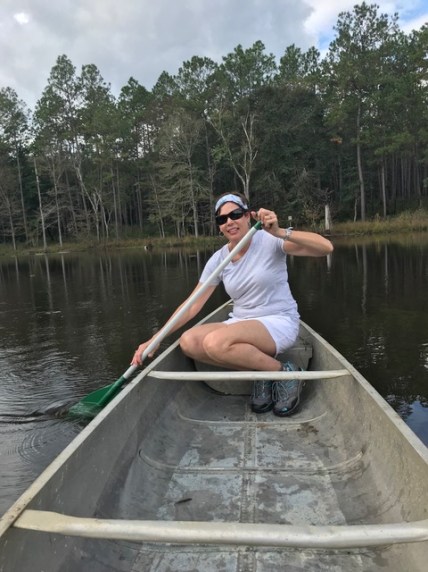
A peaceful paddle on the lake. My reminder to slow down.


Lo Siento

I am (Deeply) Sorry

 Just 14 days after we departed a camping trip in Guatemala, Feugo Volcano erupted with its most violent force in four decades. At the time of this post, its pyroclastic flows had claimed the lives of 110 people, with almost 200 more still missing. For Guatemalans living in the Volcano’s shadow, the sounds and sights of Fuego’s daily eruptions are commonplace. Though we camped more than 10 miles away, we often heard the distant rumble and viewed the black plumes spewing upward as the active volcano flared. We are deeply sorry for the people of Guatemala who treated us with such warm hospitality during our stay.  

It was just one short article in the travel section of The New York Times last December. The headline, “With Mobile Camping, Remote Places and Light Footprints” was enough to catch Lynn’s eye. We were tossing around the idea of a vacation with our girls to celebrate our oldest daughter Annie’s graduation from college. The girls wanted a beach in Costa Rica. Lynn and I wanted something a little more active.  Among other out of the way places to camp, the article mentioned trekking in Guatemala. Might be an interesting compromise we thought and shelved the paper in a basket of magazines in the central hall. Four months later we dug it out of the basket. In mid-May, destined for the “best family vacation ever” we were on a plane to Guatemala.

Tents at Sunrise

Tents at Sunrise.

Glamping is not usually our thing. What’s the challenge in camping if you don’t set up your own tent at night or tackle the task of an epicurean meal with one can of propane and two small burners? But here we were, signing up for a trip with canvas tents, cushy air mattresses, gourmet meals, someone to lug our gear from one campsite to the next, and yes, even a toilet. I secretly enjoyed the thought of carrying only a day pack. After all, I already had to be “that lady,” hiking up and down the hill to the Fairhope pier breaking in my size 10 boots, and didn’t want to add more attention by training with a giant pack on my back.

IMG_1443

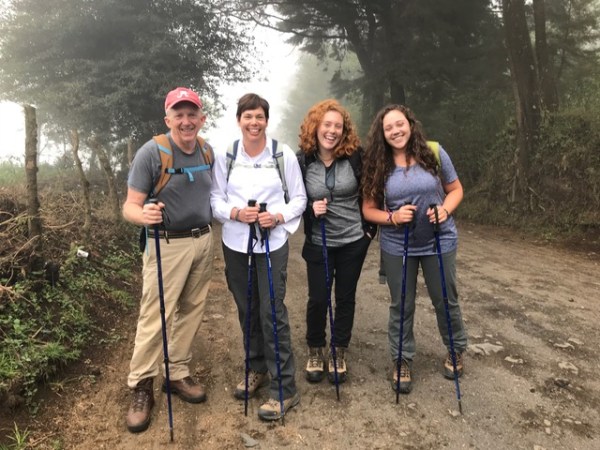
Day one at the Trailhead.

We arrived in Guatemala after navigating the first of the month at breakneck speed. Work for us, final exams for the girls, Annie’s graduation celebration with family, culling “things” collected in college, and moving the rest back home. In between, we squeezed in what exercise we could in preparation for the trip. Our lives are spent in the low lands of coastal Alabama, elevation 112 ft., and there was no way we could adequately train for Guatemala’s altitude. The trailhead would begin at 7500 ft. with the highest point of the trek topping 9000 ft. According to the planned route, in between camps, the trail would rise and dip with the mountains, leading us through tiny Mayan communities and acres of fertile farmland.

We quickly made friends with our trekking family which expanded beyond the four of us to include the owner of Trek Guatemala, a native Guatemalan guide, and two adventure tour agents gaining first-hand knowledge of the glamping experience before selling it to clients. On days two through four, local guides hired from communities along the trail, would also accompany us.

IMG_1480

A map of the trek route hangs in the dining tent so that hikers can see the ups and downs of each day’s progress.

We began our trek easily enough, in high spirits, on a wide flat road with a mist from incoming clouds. Every twist and turn was a photo opportunity – wild roses decorating the roadside, lush forests shrouded in cloud cover, and farmers carrying bundles of leafy foliage gathered to feed hungry bovine. Day one’s uphill ascent was challenging but not impossible, offering a chance to acclimate with fewer miles to traverse. I dug in my trekking poles and accepted helpful tips on breathing for the altitude – Pranayama for the hiker, if you will, to oxygenate my blood.

IMG_2455

A farmer gathers foliage to feed his cows. Photo courtesy Lynn Yonge

Day two was another matter. Early on in our trip, our youngest daughter Genna, who has a second college major in Spanish, schooled us in the difference between lo siento meaning “I am deeply sorry” and perdóname, an informal apology.  The former she said, is often used incorrectly. But day two of our trek would find those words slipping through my brain and off my tongue like a native speaker. On the map, our route looked like a rollercoaster. First uphill, then a long downhill descent to a hanging bridge, followed by the steep uphill stretch to Fuego Camp. Still in great spirits, but not yet acclimated, I seriously questioned my ability to keep pace on the first uphill leg of the day’s journey. I lagged behind, offering apologies to my trekking family. As we snaked up the long hill single-file, I silently counted my footsteps, thinking it would at least help me mark the progress. My breath sounded ridiculously loud in my ears until at some point, my yoga practice kicked in.  In yoga, I thought to myself, I move toward the pose, not afraid to admit, after ten years of practice, I still can’t touch my toes. But here on the mountain, I felt as if I needed to preface my desire for every break with lo siento. Finally, I announced, “I’m not afraid to say it, I need to stop.”  Equally winded from the climb, other members of our trekking party enthusiastically embraced the rest.

DSC02358

Taking a break on the trail.

While it took four days of hiking to truly feel acclimated to the altitude, I soon accepted my willingness to move toward my goal of accomplishing the day’s miles, while laughing about frequent rests, rather than conquer the challenge in misery. Un momento, por favor (hold on, please), I said to our local guide at nearly every S curve. He patiently agreed, even offering to carry my daypack to make my climb easier. I gladly handed over the pack, grateful for both his help and the ability to recognize that my limitations don’t always call for “lo siento.”

IMG_1551
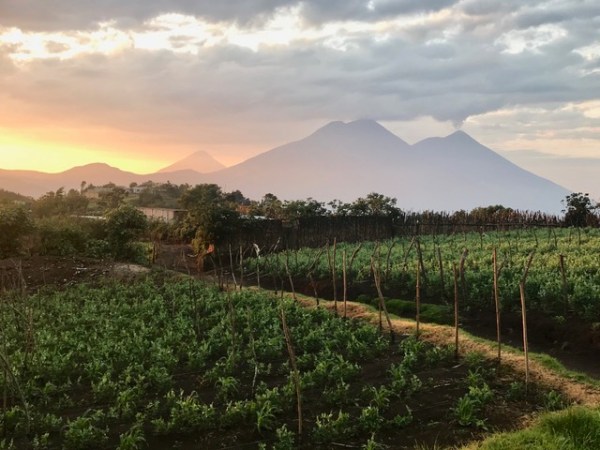
Sunrise view of Fuego Volcano from the Trek Guatemala campsite on day two.

Inspired to go glamping in Guatemala? Contact one of these three companies to find out more information and plan your trip.

Trek Guatemala

Root Adventures

Maya Trails


Muck Boots

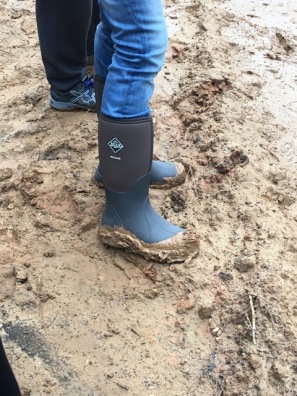
For my 50th birthday, my husband took me to Paris. On my 51st, he bought me muck boots. The gift was by request, much like my first technical rain jacket, he purchased years before. The boots are tall and brown, perfect for strolling through the bottomland after a heavy rain, and equally handy for stepping out on the dirt road when the dusty, orange clay turns to thick, sticky mud. Which is exactly what I feared would happen last weekend.

muck boot photo

The girls were bringing friends to the camp for a couple days of fun before the end of the college semester and graduation. Lynn and I invited our close friends and their guests to join us for the day on Saturday. Entertaining off the grid is more preparation than talent. With illusions of throwing an event worthy of being featured in Garden & Gun magazine, I set to work planning menus, grocery shopping, and gathering supplies. Lynn ordered pounds of shrimp, potatoes, and corn, and brought out the 15-gallon pot for boiling.

As the week progressed, we kept a keen eye on the weather. When you live near the rainiest city in the country, thunder storms are common and often move through quickly. But when your entertainment venue can only be reached by a narrow, dirt road, a high chance of a gully washer is reason to cancel. For some freak of nature, rain is always in the short-range forecast when we plan to have guests at the camp. I’ve lost count of how many times we’ve had to call it off.

As Friday morning dawned, I opening the weather app on my phone every hour or so, hoping mother nature had a change of heart. But no, it read like this:

   Today, Mostly Cloudy, Precipitation 10 percent;

  Saturday, Strong Storms, Precipitation 90 percent;

  Sunday, Partly Cloudy, Precipitation 10 percent.

The forecast for the remainder of the week was sunny. I found myself putting “damn it” at the end of every thought. “Why does this always happen, damn it?” “When’s the best time to call it off, damn it?” “We’re going to have so much food left over, damn it.”  “It’s just not fair, damn it.” In so many ways, letting go was not going to be easy.

weather forecast

Our friend called, “Have you seen the forecast?” he asked. We spent the better part of 30 minutes debating the best time to cancel. “We’re worried about y’all driving on the dirt road after a heavy rain,” I explained. “I have muck boots and four-wheel drive.” We both agreed muck boots were not a staple in their wardrobes. Although, he suggested it would make a good title for a blog post.

That afternoon I packed my bag and my ego and headed for Washington County. Though the weather called for rain, I looked forward to quality time with my family. When a partly sunny Saturday morning arrived, I renewed my frustration with the weather gods and doubted our decision to put off the picture-perfect party. The girls spent the morning fishing and as I settled into a comfortable camp routine, I changed my perspective, and my attitude, enjoying the moment and making new plans for the extra food we would take home.

We downsized the shrimp boil to feed eight and used a clean garbage can lid, not a fancy platter to serve. From the smiles on the college students’ faces, and our girls’ gratitude for the hospitality, I’d say it was still a magazine-worthy event.

Processed with VSCO with f2 preset

Shortly after clean-up, like a train on schedule, a record amount of rain came roaring through. At peace with our decision to cancel the party, we took a nap…to the rhythmic hum of rain on the tin roof.